vibcreates Los Angeles, CA · 34.05°N

I'm Vib.

An econ grad who fell in love with code, a founder who never stopped writing it, and, underneath all of it, a lifelong connector of dots.

It's Vibhav Gupta on paper, Vib to everyone else. I spent seven years as founder & CEO of CannMenus, a mostly bootstrapped team that went up against competitors with millions more in funding and won business anyway. I also sold the product myself, cold calls included, so I'm just as comfortable in a stakeholder meeting as I am in the schema. These days the pull is space, which is probably the way it was always going to be. I now run two live platforms that reconcile satellite catalogs and exoplanet archives, plus a detour into teaching a pair of phones to make honest line calls at tennis practice. It's been true my whole life that when a problem grabs me, I go all the way in, learn the domain end to end, and then carry what one field knows into another, and build the thing that wasn't there before.

Open to: senior / staff roles in data platforms & AI infrastructure Equally open to: product roles that want someone with exactly this technical background Taking on: fractional data engineering & AI consulting
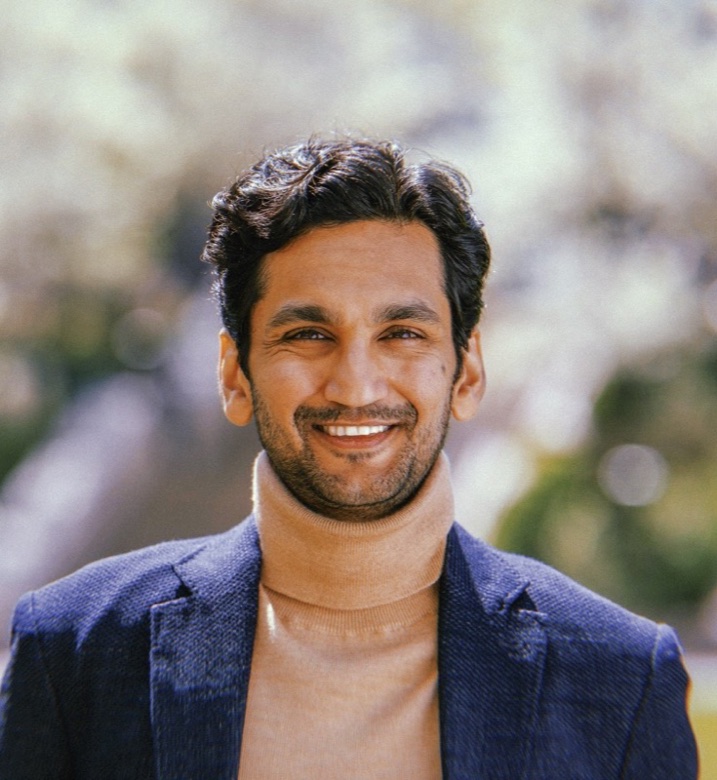
Vibhav Gupta
fig. 0 · the person in question
The work

Four domains, all of it real and running.

01
Retail data
seven years of my life ↓

CannMenus

Founder & CEO · 2019 to present

Cannabis retail had thousands of menus and no ground truth. The biggest operators could buy answers, and everyone else guessed. CannMenus watched nearly 18,000 live menus that covered roughly 90% of licensed dispensaries in the U.S. and Canada, read every product with classification models that we trained for the job, and turned the mess into clean, categorized pricing, inventory, and sales intelligence (sales estimated from stock movement, calibrated against official state figures). The part the market cared about most was speed: our answers refreshed in minutes, while the competition's took a day and sometimes a week. Demand found us too: at peak, Semrush-estimated traffic reached 150,000 people a month arriving through organic search, and that was an SEO and SEM engine that our rivals never matched. We were mostly bootstrapped against competitors who raised millions more, but we won paying contracts across brands, distributors, retailers, and data teams anyway, and I closed most of them myself. We watched the incumbents start emulating our strategies and following our releases, and we acquired one of our rivals along the way, integrated it in four months, and turned it into our strategic expansion into the Canadian market. The thing I'm proudest of is that our measured data accuracy went from 78% to 96%, and we published it whatever it said.

150k
monthly visitors at peak, organic search (Semrush est.)
~18,000
live menus watched, 10,000+ dispensaries
minutes
to fresh data, vs a day to a week for rivals
20M+
menu events streamed and processed per day
1
rival acquired, and with it the Canadian market
78→96%
data accuracy, measured
02
Satellites
the catalogs really don't agree

Orbital Economy Intelligence

Built solo · 2026 · live & refreshed nightly

Space-Track, CelesTrak, GCAT, and the UCS registry openly disagree about who owns what in orbit, and nearly everyone resolves it by quietly picking one source. OEI keeps all four of them, so what you get is an identity graph where every value remembers which catalog said it, a replayable merge log, and the disagreements themselves, which are the product here. Nearly every shared object (99.3%) disagrees somewhere across catalogs, though most of that is naming and granularity, and then there are the 4,400+ conflicts that are actually substantive, which are the ones about decay dates, operational status, and stale ownership. Each one of those gets surfaced with receipts instead of being averaged away. And because the graph now knows both where everything is and what it is licensed or observed to transmit, which meant joining FCC filings and the radio amateurs' transmitter database onto satellites that regulators and hobbyists name completely differently, there is a page where you give it your location and it tells you which satellites you can actually receive right now, frequencies and pass times included. OEI now also reads the FCC's pending filing queue, which described Starlink Gen1 14 months and Kuiper 39 months before their first launches, and it serves page-cited constellation specs extracted from the filings themselves.

70,080
satellites, one resolved identity each
9.7M
orbital element sets, hypertabled
99.9%
operator attribution coverage
4,400+
live conflicts surfaced, not averaged
03
Exoplanets

ExoDossier

Built solo · 2026 · live & refreshed nightly

The exoplanet archives disagree on radius, temperature, even whether a candidate is a planet at all. Those flips can change whether a world counts as habitable. ExoDossier reconciles the NASA Exoplanet Archive, ExoFOP, KOI, and Gaia into one provenance graph and generates cited vetting dossiers for each candidate. It also ships the first MCP server for exoplanet data, so AI agents can query the sky directly.

20,341
host stars cross-matched
23,033
candidates tracked
684k
per-attribute source assertions
7,900+
radius / disposition / Teff conflicts
04
Tennis
started as a practice argument

SplitStep

Building solo · 2026 · in field testing, v0.17

When I moved to LA I didn't know many people who played, so while I rebuilt my roster of hitting partners, solo practice had to actually count. I'd also spent years admiring broadcast tech like Hawk-Eye, and just as many watching amateur matches dissolve into line-call arguments nobody could settle, with no honest way to tell whether your game is even improving. The pro-grade answer costs more than most amateurs' rackets. So SplitStep: tennis training from phones you already own. No sensors, no subscription, no cloud in the sensing path. Two ordinary phones on court pair themselves over local Wi-Fi, sync their clocks to under a millisecond, and then make coordinated measurements with their mics and cameras together: the microphones establish exactly when a ball was struck, and which side it happened on, from the tiny difference in when each phone heard it, while the cameras track where the ball went. The vision half runs on a 1.16 MB ball-detection CNN that I trained from scratch in PyTorch, which I taught first on synthetic rendered balls, then graded only on real photos that it had never seen, and kept improving until its accuracy more than doubled across five versions. A single training run exports the same weights to Android, iOS, and my research bench. Building systems that perform far above their cost, and that are accessible to the everyday player instead of just the tour, is the lean playbook that I sharpened at CannMenus, and here I've evolved it for an arena where the constraints are physics and light instead of scrapers and schemas. I've also got a provisional patent drafted.

2
phones, zero extra hardware
1.16 MB
ball-tracking CNN, trained from scratch
sub-ms
cross-device clock agreement
1
provisional patent drafted
Before this

A decade of data platforms and reliability.

2023University of Chicago, Genomic Data Commons · Senior SWE: automated test and reporting pipelines in GitLab CI/CD for national cancer-research data
2020 – 22SpotHero (acq. Uber) · SWE: end-to-end test frameworks, contract testing with Pact, and readiness load-testing for the Lyft integration's traffic surge
2019 – 20DAIS Technology (acq. Origami Risk) · Senior SWE: CI/CD test frameworks across concurrent products
2018 – 19Rewards Network · SDET: QA architecture for a streaming-data re-platform
2017 – 18Uptake · SWE: CI/CD and automation for industrial IoT telemetry pipelines, during its run as the fastest U.S. startup (at the time) to a $2B valuation
2015 – 17Networked Insights (acq. AmFam) · QA Automation: re-architected regression to run 5× faster
eduDePaul University · B.A. Economics: invited into the departmental honors program as a top economics student, with a behavioral-economics honors thesis and graduate-level econometrics as an undergrad, plus programming coursework right up to a CS minor, where I chose a mobile-app development class over the final requirement and shipped a working app instead
Proof, not promises · four numbers pulled live from my platforms as you load this page querying live systems…
satellites resolved to one identity · my satellite platform ↗
orbital position records kept · my satellite platform ↗
exoplanet candidates tracked · my exoplanet platform ↗
sourced facts, receipts kept · my exoplanet platform ↗
Method

A playbook I keep rewriting.

Eight principles have held across four very different industries. Everything underneath them, the tools, the tactics, the assumptions, gets rebuilt each time a new domain teaches me something the last one couldn't. And I should say it plainly: I'm a sworn enemy of "it's always been done this way." Every field I've worked in had a rule that everybody repeated and nobody could defend, and finding that rule is usually where the value starts.

iFind the disagreement

Where authoritative sources contradict each other is exactly where a system of record is worth building. Most pipelines average the conflict away, but I catalogue it, because it's the most honest signal in the data.

iiUnify it, then invent the metric

Different sources describe the same reality in completely different shapes. I break the data down and put it back together, whether it arrived as e-commerce menus, credit-card transaction feeds, or social media streams, and I build systems that read it efficiently at scale. Then comes my favorite part, which is inventing measurements that nobody had. Estimating sales from stock movement started as exactly that kind of creative metric, and it opened doors that the raw data never advertised.

iiiKeep the receipts

Every value carries its source, its timestamp, and the precedence rule that made it win. Merges are logged and replayable. Trust is an audit trail, not a vibe.

ivGrade against ground truth

OEI and ExoDossier both ship gold-standard evaluations, and the accuracy numbers are published. For SplitStep I re-benchmarked a published 83% prior-art claim, and I measured 31%. Then I built something better, and I graded it the same hard way.

vTranslate, and take counsel

Connecting dots includes the human kind. I translate business needs into technical solutions and back again, and because I've spent a decade across very different domains, I usually smell a problem before it lands. I have also made a habit of surrounding myself with mentors and advisors who are further down the road than me, and their hard-won wisdom has steered me around more than one landmine.

viDesign the data model first

I am QA-minded to the point of nitpicky about getting data clean and granular, and I think through the data model carefully before implementing anything. The goal is a model as flexible and adaptable as the world it describes, which is exactly why the systems I built years ago slotted straight into the AI era instead of needing a rebuild. Time-series at scale is home turf: the product_events hypertable at CannMenus alone lands 15M+ rows a day across nearly a thousand daily partitions, part of the 2.5B+ event rows I keep clean and queryable.

viiLove the domains that fight back

I gravitate to domains that demand genuinely customized solutions. Cannabis retail needed its own normalization stack. Tennis needed a CNN that was trained for one specific ball and one specific game. Space runs on catalogs and formats that are all its own. Off the shelf was never going to work in any of them, and that's precisely the appeal.

viiiRun it transparent, run it lean

Everything above runs in production and in the open, and that means live metrics on this page, published accuracy numbers, and honest write-ups when something misses. And it runs lean, because I would rather engineer past a cost than pay a premium to take the easy way out. That discipline is a big part of how CannMenus outran rivals with millions more.

Off the record
as a kidThe one everybody called to fix their devices, and the one whose parents got fed up finding another gadget in pieces, because I kept dismantling things trying to build something new out of them.
rootsAn immigrant household and a dozen interests. A childhood spent translating between worlds.
degreeEconomics at DePaul, where I was invited into the departmental honors program as one of the top economics students. My honors thesis focused on behavioral economics, and the program had me taking graduate-level econometrics as an undergrad.
the tradeThe app boom was on, so one class short of a CS minor I swapped Computer Systems II for mobile-app development. I was short on prerequisites and long on wanting to ship. The final project, which was a working app built from scratch, came back near perfect.
with new softwareI read the manual. All of it. Then I live in the settings menus until I know every toggle and shortcut, whether it's After Effects or IntelliJ. It's how I've picked up complex platforms fast my whole career.
temperamentThe one people pull into a hard conversation. I keep my cool, translate between the sides, and look for the door that everybody can walk through.
home courtLos Angeles, by way of Chicago.
the fitness journeyIt reorganized my life, and it's still going. I consider myself lucky whenever I can start or end a day on a tennis court, and the discipline carries into everything else I build.
after darkRocket club in middle school, a tiny club you got invited to for earning the top science grade in your class, which I did. Then I came up watching the shuttles retire. Artemis, the new space race, and a decade of exoplanet discoveries pulled me all the way back in. Two years captivated, and now a database of 23,000 candidate worlds.
latelyFinally watched Project Hail Mary, and it earned every bit of the wait. Caught a star party in Silver Lake, and I keep showing up early to the Astro on Tap talks in Pasadena, because the astronomers are even better company than the telescopes.
friday nights, collegeShark Tank, religiously. I was an econ major watching founders defend their numbers. The itch started there.
double lifeEngineer who sells. I cold-called and closed nearly every CannMenus contract myself, and it turns out building the product and selling it are two halves of the same education.
whyGood decisions need honest data, and honest data doesn't just happen. Somebody has to keep it that way, and I decided a while ago I'd rather be that somebody.
favorite partThe moment a genuinely novel solution clicks into place. Sometimes that's me alone at midnight. More often it's a few of us putting our heads together until the idea that nobody walked in with shows up.
operating styleQuality first, but still fast. I won't ship a thing until it has a number attached and I can tell you where the number came from.
proudest habitPublishing the accuracy number no matter what it says, the good runs and the humbling ones both.
recognitionWinner of the 1871 Chicago Cannabis Innovation Lab's Innovation Day pitch competition in 2023, and named to a cannabis-industry 40 Under 40, class of 2025.
this websiteDesigned alongside my own AI agents and deployed on a $7 server that I administer myself. The numbers on this page aren't marketing copy. They're live queries against my databases.
more where this came from: the fun file (what I'm watching, reading, and playing)

Contact

Two ways to work with me.

Need a system of record,
or the person who builds them?

The fastest way in is email, and I actually answer. This site runs on a $7 server that I administer myself, and the live numbers on this page are real queries that hit my databases at the moment you loaded it. I built it the way I build everything these days, which means that my AI agents do the typing, I do the deciding, and nothing ships until it's been checked.

Fair warning, offered playfully but meant sincerely: I will sometimes ask why things are done the way they are, and whether a better way exists. If that's not something you'd appreciate in a teammate, we probably shouldn't work together. If it is, I think we're going to get along just fine.

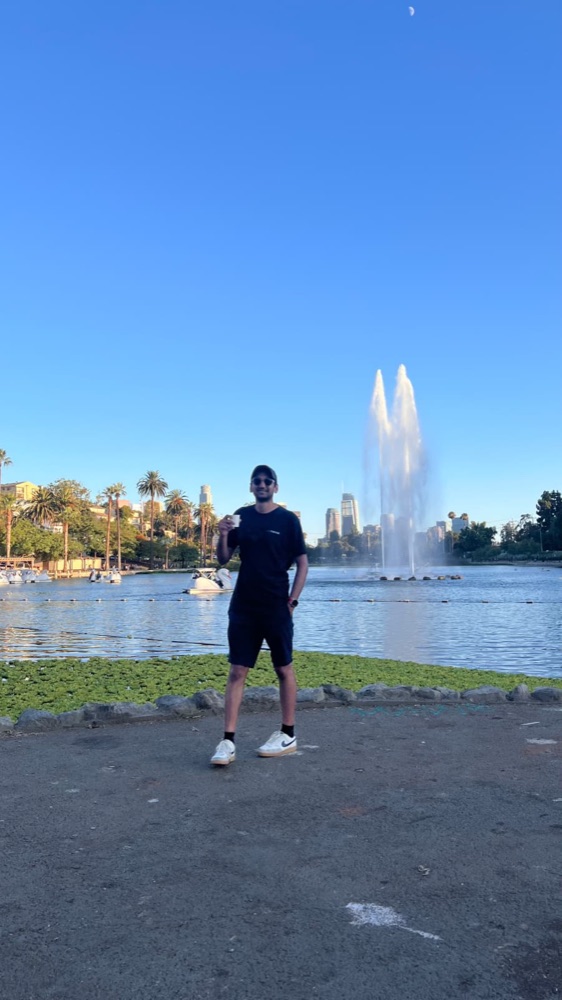
Vib at Echo Park Lake, downtown Los Angeles behind
fig. 2 · Echo Park, Los Angeles · home these days